
Gardening is one of the great pleasures in life and one that has certainly grown in popularity during last year’s lockdown. According to DIY store Homebase the UK public bought 322 million more plants in 2020 compared to 2019. We, as a family, were certainly part of this trend. For years we had wanted to grow vegetables and herbs but had struggled to find the time. With everything closed and the need to stay safe and stay at home we suddenly had the time to start. We only have a small garden and put our raised beds in our front garden as the back is taken over by dogs and kids with all their associated toys and equipment. Plus the front garden is a sun trap, much more so than the rear.
As a total beginner we made loads of mistakes and had a few successes. I learnt that no one needs 3 courgette plants – it’s not physically possible to eat as many courgettes as 3 plants produce! Our strawberries sent out loads of runners, and we harvested about 4 strawberries last year but, as it is possible to grow strawberry plants from the runners, now we have 14 strawberry plants. I am anticipating a bumper crop this year. Tomatoes were a massive failure for us, they got blight or I managed to kill them slowly and hardly get any ripe fruits from them.
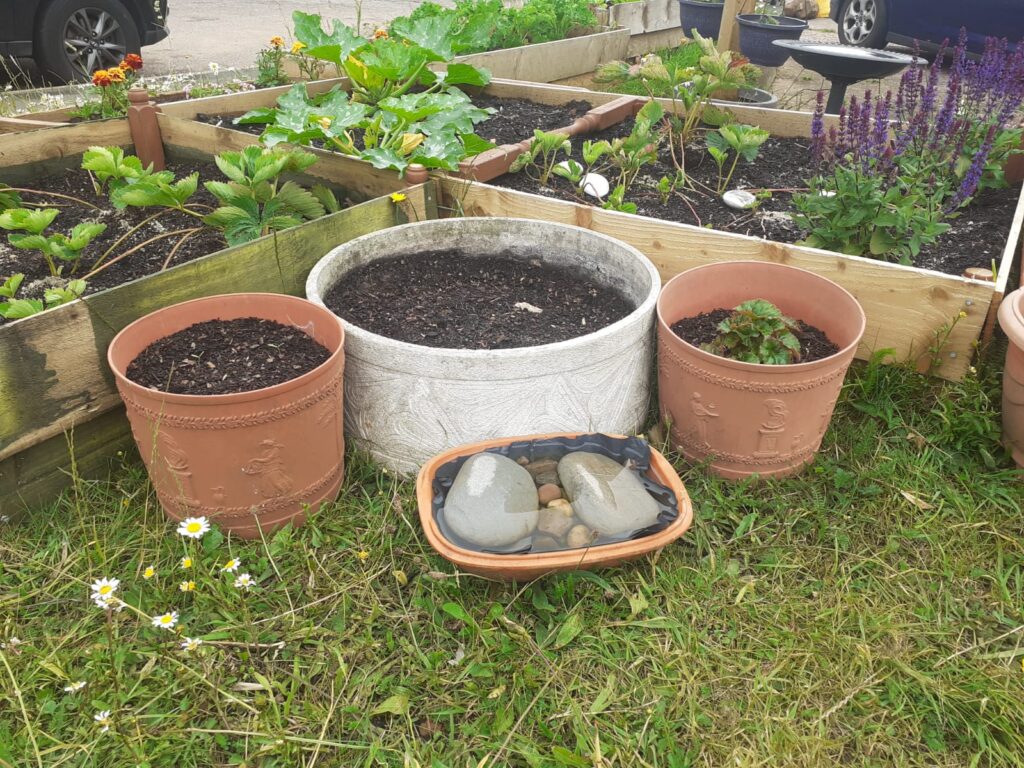
We are a pretty eco-conscious family so what really mattered to us was growing in an environmentally friendly way that respected and enhanced our natural environment. We do have one big problem in our garden and that’s slugs. I wasn’t going to use slug pellets and didn’t fancy the idea of beer traps, so I turned to nematodes. They were really effective but I strongly suggest against googling how they work, I only hope reincarnation is not a thing and I never come back as a slug (think the film Alien!).
I did a lot of reading, watched a lot of Youtube videos and joined Facebook groups to get gardening advice and here are some things we did to make our garden nature friendly.
We set up a bird bath, it was one I found for free on Freecycle, it did have a slight split in it which I didn’t realise until I got it home but a bit of silicone soon sorted that issue. I love a good recycle, re-use! In the summer the birds go nuts over it and make such a racket splashing in the water, it’s a joy to watch. I also added a small dish of water at ground level, filled with stones, to let any critters that fell in, climb out. I hid this in some undergrowth and it provides a watering station on hot days.
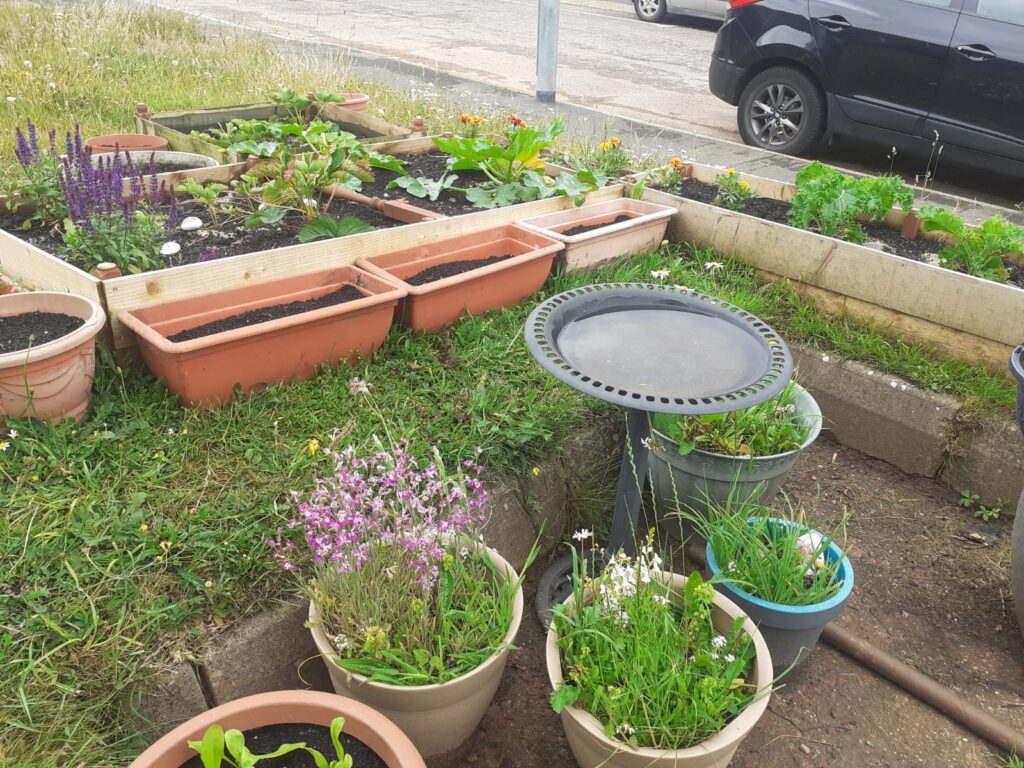
We don’t have a tap at the front of our house so we set up a water butt and use that water to water our raised beds. It’s so much easier than dragging a hose through the house, plus we are on a water meter! I also water less frequently but deeper as I was told this was better for root development.
We don’t use any man made fertilizers or pesticides. Instead, bought (locally, of course!) some home-brewed nettle and comfrey tea which stunk but the vegetables seemed to love it. I also used wood chips to mulch the beds and reduce water loss and over winter we used seaweed that I had rinsed off to protect and fertiliser the soil. By law you can take one carrier bag a day from the beach, so after we had a big storm I went and collected some from the tide line.
I make my own compost with veggie scraps from the house, grass clippings and a generous quantity of rabbit cage bedding from my neighbour. This will be our first year using the compost, and so far,it looks good and has tonnes of worms in (good for aerating the soil) and smells like compost. We have 2 compost bins which I bought cheaply from the reuse shop at the recycling centre.
I do use the principals of companion planting, this is where you plant other plants to protect your vegetable crops as bugs either don’t like the smell they produce or would rather attack that plant instead. I also accepted that as part of nature I will lose some of my plants and produce to the wildlife and I am ok with that.
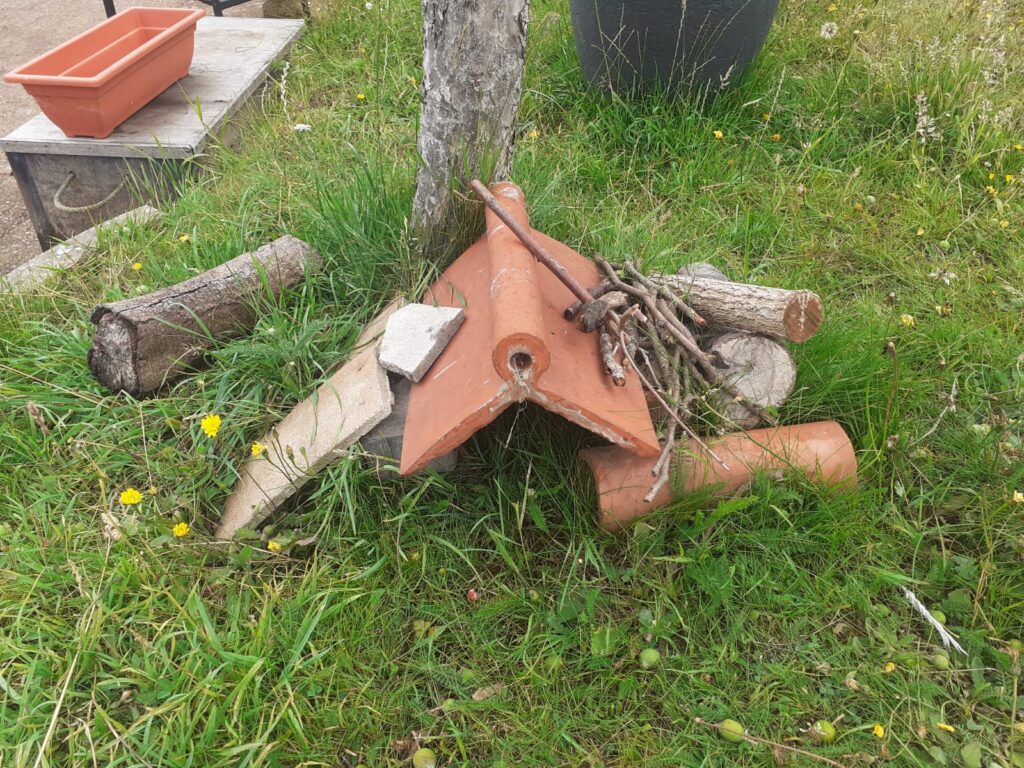
I try to encourage birds and wildlife to my garden so that they will naturally eat some of the pests such as slugs. To do this, I made a hedgehog home, installed a bug hotel and left a pile of rotting logs near the veggie patch to provide a habitat for beneficial insects.
I have a bird feeding station set up in my apple tree and provide a range of bird foods from fat balls, to seeds to meal worms. The meal worms are certainly the most popular and I have barely gotten back to the front door before the birds start feeding. I couldn’t tell you what birds they are as my knowledge is limited but they are small and pretty noisy!
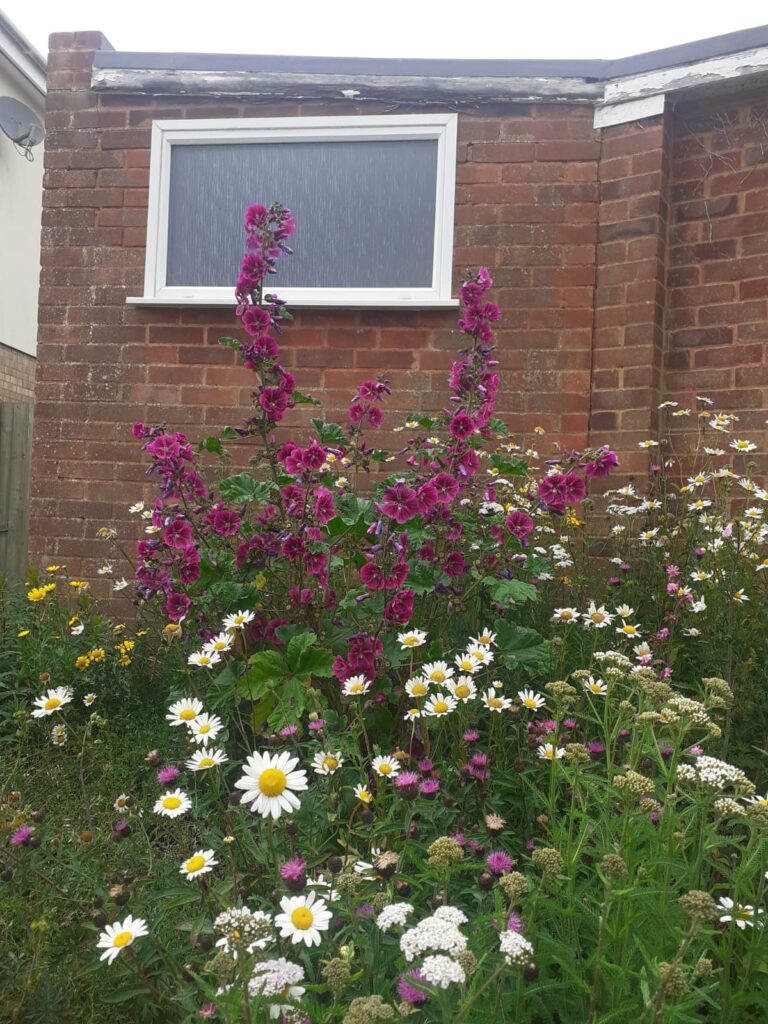
We also wanted to grow wildflowers to attract pollinators (love a bumble bee!). We have a small patch of scrubby raised bed at the side of our garage, and a few years ago we took off the grass and added some native wildflower seeds. I occasionally water the area if we have a prolonged dry spell but otherwise I do nothing to it and for 4 months of the year I am treated to a riot of colour. I couldn’t tell you which varieties they are but they are all beautiful. I also bought some big garden pots and tubs from the resale shop at the recycling centre and planted those with wildflower seeds, they brighten up our boring concrete driveway a treat.
All of this was achieved on a budget and many items we were able to get very cheaply or even for free. We grew a lot of things from seeds and used the seeds we got free with a gardening magazine. We will use the seeds from this years crop to plant next years crop – the cycle continues! We also bought small plants from local growers who do this to raise funds for a charities they support. We learnt a lot and had some epic failures and some great successes – remember the courgettes!
It has really sparked our interest and both me and my husband have undertaken an online Square Foot Gardening course to learn more and now practice no dig gardening as this is better for the soil structure as it causes less damage and doesn’t promote weeds in the same as way double dig gardening methods, plus its easier and less back breaking! Due to a lack of space we had to use our front garden but it’s so much more interesting than boring grass.

Perhaps vegetable gardening isn’t for you…if so, I strongly encourage you to try No Mow May instead This is exactly as it sounds: from the 1st of May don’t mow your lawn. The aim is that we let the natural wildflowers which some people may call weeds grow in our grass. These wildflowers are an important food source for pollinators in the bee hungry gap, which is the time frame between tree pollen being available and the other plants, wildflowers have traditionally filled this slot.
This is being arranged and coordinated by Plantlife who are running the campaign. . You can also take it a step further and help Plantlife with their aim of understanding how many bees and other pollinators our UK lawns can feed and support. To do this there are 3 simple steps to follow:
- Measure a 1 meter quadrant
- Count how many flowers are in that quadrant
- Then submit your survey results
For all the information go to the Plantlife No Mow May (plantlife.org.uk) and they even have a handy video explaining what to do and how to do it. Then in just a few weeks you will have grown your very own mini wildflower garden; it’s that simple! The plants are already there they just need a chance to grow.
Written by Catherine Causley
May 2021